Last updated:
Looking for dental crowns or bridges near Claremont? Renov Dental Group, on N Indian Hill Blvd just north of the Claremont Village, provides strong, natural-looking porcelain restorations for cracked, root-canaled, heavily filled, or missing teeth. Care is led by UCLA-trained Dr. Sally Yi, DDS, the office accepts most major PPO insurance plans, and it is known for genuinely gentle care for anxious patients. True to our conservative philosophy, we recommend a crown or bridge only when it protects the tooth's future or restores function.
A dental crown is a custom-made cap that covers a damaged tooth entirely above the gumline, restoring its strength and appearance when a filling is no longer enough. The tooth is shaped, an impression or digital scan captures the contours, and a lab mills a ceramic cap engineered to take chewing force safely. Crowns are most often used after root canal treatment, on cracked or heavily filled teeth, or to top a single dental implant.
A dental bridge replaces one or more missing teeth by anchoring an artificial tooth to neighboring teeth or dental implants, restoring the gap and your bite without a removable appliance.
A crown works best when enough healthy tooth structure remains to support it; if a tooth has broken down too far, a build-up or — in advanced cases — extraction and a dental implant may serve you better. Active gum disease is treated first so the restoration seats against healthy tissue.
A bridge depends on the abutment teeth on either side of the gap being strong and backed by healthy bone, since they carry the chewing load for the missing tooth as well as their own. If they're already compromised, an implant-supported option is often more conservative, since it avoids reshaping healthy teeth. Unmanaged grinding should also be addressed before treatment.
Comprehensive examination
we evaluate your oral health and determine whether a crown or bridge is appropriate.
Treatment planning
a personalized plan is developed based on your condition and goals.
Tooth preparation
the affected tooth or supporting teeth are shaped under local anesthesia.
Impressions
a precise impression or digital scan records the preparation.
A custom provisional restoration
protects the tooth while the lab crafts your final ceramic piece.
Placement and adjustment
final try-in, bite adjustment, and cementation, checked until it feels natural.
Mild sensitivity to hot or cold is common for a few days after preparation, especially around the temporary crown. If the bite feels slightly tall, a brief adjustment fixes it — just call. A crown typically takes two visits about two weeks apart; implant crowns and implant-supported bridges follow the implant's own healing schedule. Cost and timeline depend on the number of units, the material chosen, and whether a root canal, build-up, or implant is involved — your written estimate spells this out beforehand.
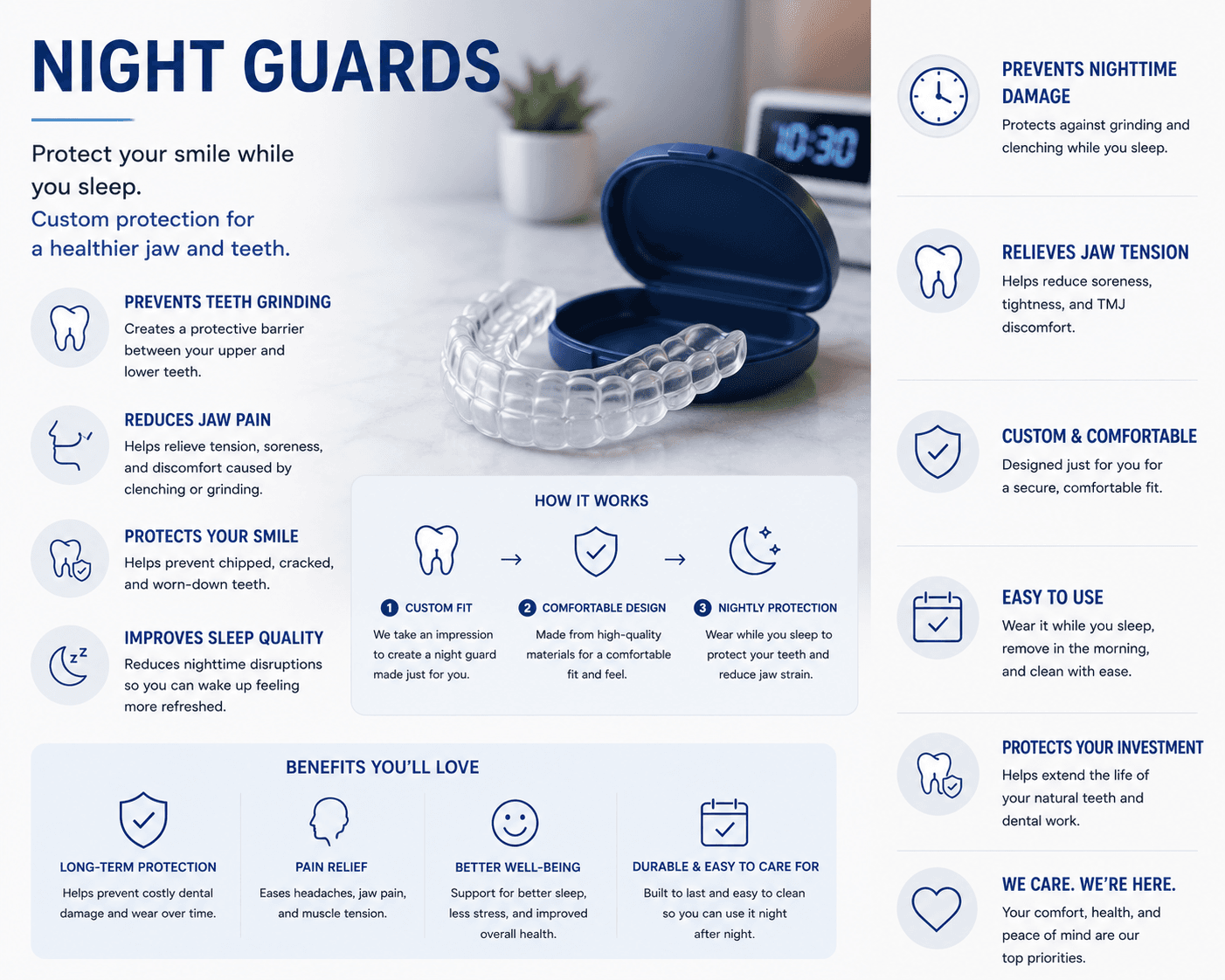
Preparing a tooth removes a layer of enamel, and occasionally a stressed tooth needs root canal treatment afterward — uncommon, but we watch for warning signs. Ceramic is strong but can chip under heavy bite forces, especially with untreated grinding, which is why a night guard is often recommended. A bridge loads the abutment teeth and needs diligent daily flossing under the pontic to prevent decay at the margins — the biggest factor in how long it lasts. Results vary by individual, and many crowns and bridges last well over a decade with good care, though none last forever.
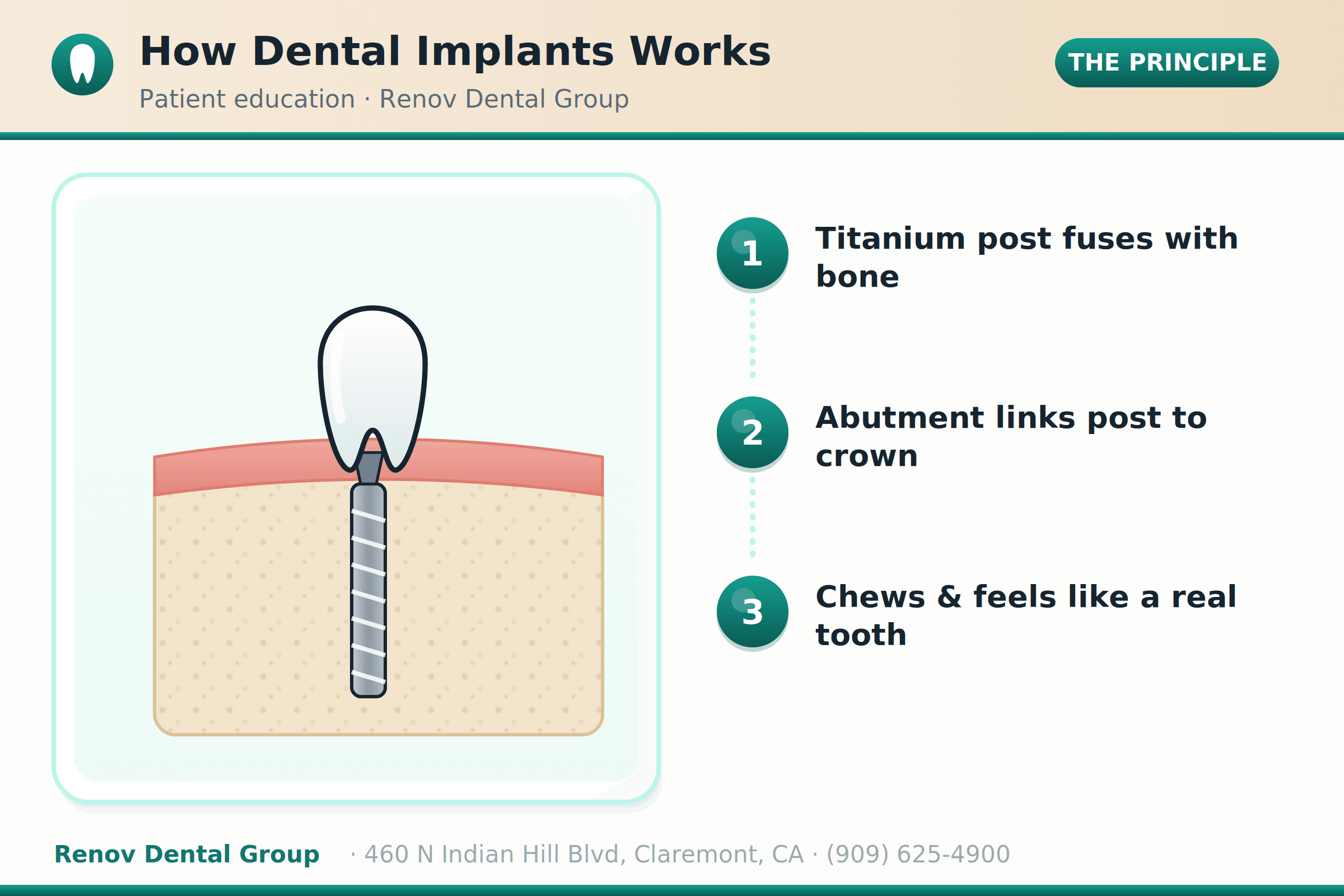
For a missing tooth, a dental implant topped with its own crown is often more conservative than a bridge, since it doesn't reshape neighboring teeth. When several teeth are missing or abutment teeth aren't strong candidates, dentures or a removable partial can be a suitable alternative.
A crown protects a cracked or root-canaled tooth that would otherwise break apart. A bridge replaces missing teeth so you can chew and speak without a gap.
The preparation visit is done fully numbed and feels similar to a filling. The temporary keeps the tooth comfortable between visits, and cementation day is typically quick.
A crown typically takes two visits about two weeks apart. A bridge follows a similar timeline, with additional planning time if implants are involved.
Crowns and bridges are typically a major-restorative benefit on most PPO plans, covered at a percentage after deductible. We verify your specific benefits and provide a written estimate before treatment. Cherry monthly financing is available for qualified patients.
If your abutment teeth aren't strong enough, a dental implant is often the more conservative alternative since it avoids reshaping neighboring teeth. A removable partial denture is another option, reviewed at your consultation.
If a restoration chips, loosens, or decay develops at the margin, it can usually be repaired or remade — catching problems early at routine checkups keeps small issues small.
Call (909) 625-4900 or book an appointment online to see whether a dental crown or bridge is right for you.