Dental Implants in Claremont, CA
Last updated:
Looking for dental implants near Claremont? Renov Dental Group, on N Indian Hill Blvd just north of the Claremont Village, provides a permanent, natural-feeling replacement for missing teeth — planned digitally and placed with guided precision. Care is led by UCLA-trained Dr. Sally Yi, DDS, the office accepts most major PPO plans, and it is known for genuinely gentle care for anxious patients.
Following Dr. Yi's conservative principles, we recommend implants only when they are genuinely the best long-term answer, and use guided techniques for accuracy and a smoother recovery.
What Is a Dental Implant?
A dental implant replaces a missing tooth from the root up: a small titanium post integrates with the jawbone and supports a custom crown that looks, feels, and works like a natural tooth. Through osseointegration, bone cells gradually fuse to the post over several months, creating an anchor as stable as a natural root. An abutment then links the post to the crown, so chewing force travels into the bone as nature intended.
Implants are most often chosen to replace a single failing tooth, anchor a bridge for several missing teeth, or stabilize a loose lower denture — and, along the way, to slow the jawbone loss that follows tooth loss.
Am I a Candidate for Dental Implants?
Most healthy adults with enough jawbone to anchor a post are reasonable candidates. A few factors are worth addressing first:
- Insufficient jawbone — often rebuilt with grafting before or during placement.
- Uncontrolled diabetes or active gum disease — treated or stabilized first for predictable healing.
- Heavy smoking — slows healing and raises implant-failure risk; cutting back helps.
- Certain medications, such as IV bisphosphonates used in cancer treatment, or a history of jaw radiation — these need careful evaluation and can sometimes rule out implants at a site.
None of these automatically disqualify you. A 3D-imaging consultation confirms candidacy and, if needed, builds in preparatory steps like grafting or periodontal therapy.
Implant Options at Our Office
- Single-Tooth Implant — one post, one custom crown; the standard of care for a single missing tooth.
- Implant-Supported Bridge — two or more implants carrying a multi-tooth bridge.
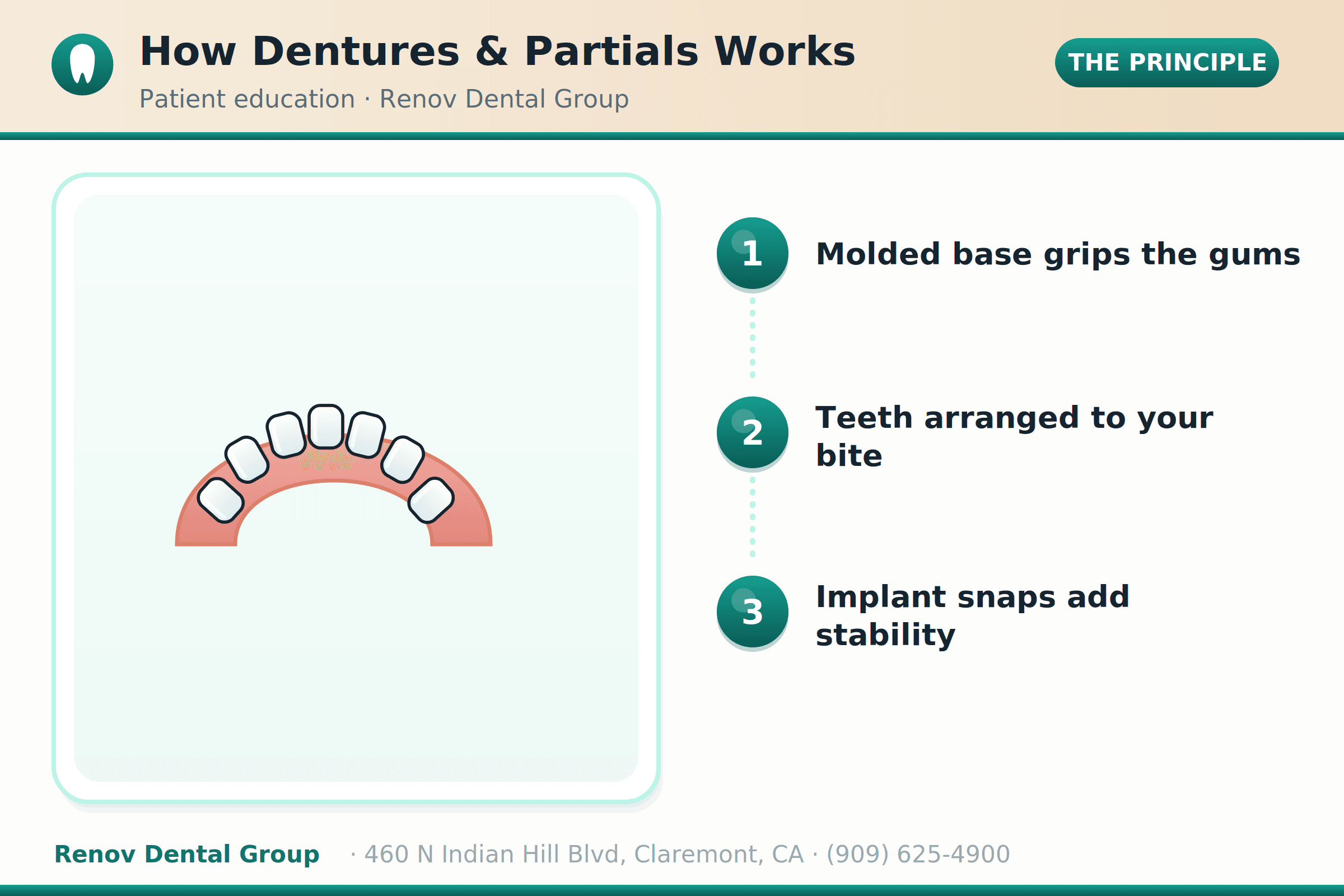
- Implant-Stabilized Dentures — implants that snap a denture firmly into place.
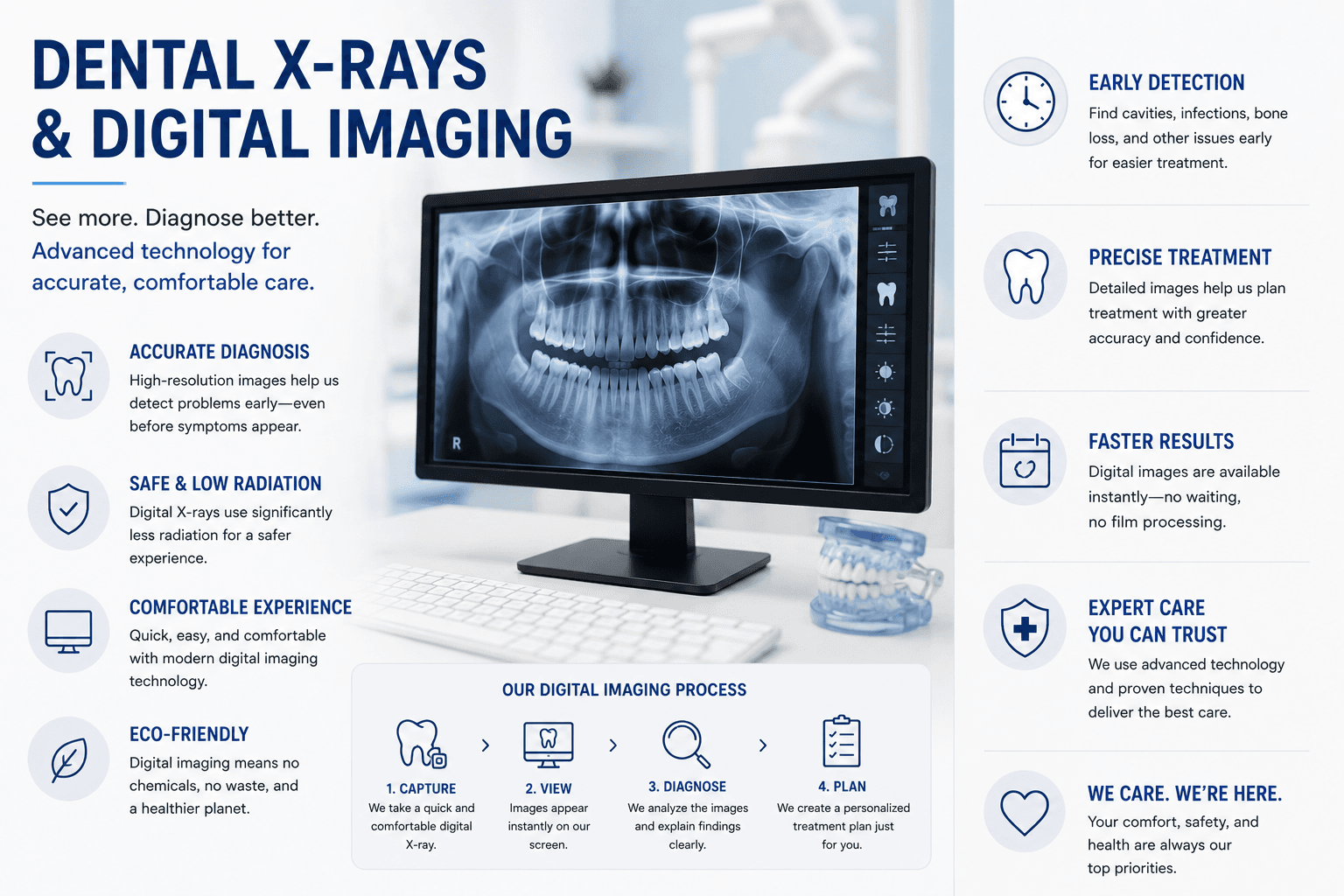
- Guided Implant Surgery — 3D-imaging planning produces a surgical guide for precise placement.
What to Expect, Step by Step
- 1.
3D imaging and digital planning
mapping bone, nerves, and the ideal implant position.
- 2.
A clear written plan
covering timeline, steps, and costs.
- 3.
Guided placement
typically under local anesthesia, with comfort support available.
- 4.
A healing period
while the bone integrates.
- 5.
Your custom crown, bridge, or attachment is fitted
— and you're chewing naturally again.
Recovery and Timeline
Most patients describe recovery as easier than a tooth extraction — mild swelling for 2–3 days is typical, soft foods help early on, and routine activities resume within a day or two. Placement is usually a single visit of about an hour per implant.
Osseointegration generally takes roughly 3 to 6 months, longer in the upper jaw or when grafting is involved; most straightforward single-implant cases finish, from placement to final crown, within about 3 to 9 months. Cost depends on how many implants are needed, whether grafting is required, and the type of restoration; we provide a written estimate first.
Risks & Limitations
Like any surgery, implant placement carries some risk: infection, minor bleeding, nerve irritation near the lower jaw, sinus involvement with upper implants, and occasionally an implant that doesn't integrate. Peri-implantitis — inflammation of the gum and bone around an implant, similar to gum disease around a natural tooth — can develop over time, particularly with smoking, uncontrolled diabetes, or inconsistent hygiene and maintenance visits.
Results vary by individual, and we don't promise a specific success rate or guaranteed lifespan — but many implants last decades with good hygiene, regular cleanings, and management of grinding habits (a night guard may be advised). Report any persistent pain, swelling, or looseness promptly.
Alternatives to Dental Implants
Implants aren't automatically right for every patient or budget. Reasonable alternatives include a dental bridge, anchored to neighboring teeth without surgery, and removable partial or full dentures, which replace one or many teeth non-surgically. We review the tradeoffs of each at your consultation.
Treatments That Pair Well With Implants
- Tooth Extraction — often planned alongside implant treatment.
- Dentures & Partials — implants can stabilize a loose denture.
- Crowns & Bridges — the final restoration placed on a healed implant.
- Sedation & Anxiety-Friendly Dentistry — comfort options for nervous patients.
Why Claremont-Area Patients Choose Renov Dental Group
- A gentle, patient-first approach for people who feel nervous about dental visits
- Care led by Dr. Sally Yi, DDS — UCLA-trained, Dean's Scholarship recipient and Resident of the Year during residency
- A conservative philosophy: preserving natural teeth and recommending only what is needed
- Most major PPO plans accepted, with monthly financing through Cherry
- A convenient office on N Indian Hill Blvd, close to the I-10 and 210 freeways
What Our Patients Say
Renov Dental Group is rated 5.0 stars across 56 Google reviews. Patients describe conservative, tooth-preserving care and a team that takes the time to explain every option. Read more patient reviews.
FAQ
Q. How long does the dental implant process take?+
A. Surgery takes about an hour per implant. Osseointegration generally takes roughly 3 to 6 months, and the full journey from planning through final crown spans about 3 to 9 months.
Q. Does my dental insurance cover dental implants?+
A. Coverage varies — some PPOs contribute toward the crown or surgery. We verify your benefits before treatment; Cherry monthly financing is also available.
Q. Do dental implants hurt?+
A. Placement is done under local anesthesia, and most patients find recovery easier than a tooth extraction. Sedation options are available for anxious patients.
Q. Am I a candidate for dental implants?+
A. Most adults with good general health and enough jawbone are candidates; uncontrolled diabetes, active gum disease, or heavy smoking may need to be addressed first. A 3D-imaging consultation confirms whether implants suit you.
Q. What if I don't have enough jawbone?+
A. Bone loss after tooth loss is common and doesn't rule out implants — grafting can rebuild the site, though it extends the timeline.
Q. What are the risks of dental implants?+
A. Infection, nerve irritation, sinus involvement for upper implants, and occasionally an implant that doesn't integrate. Peri-implantitis can develop over time without consistent hygiene and maintenance visits.
Schedule a Consultation
Call (909) 625-4900 or book an appointment online to see whether dental implants are right for you.