Dental Fillings in Claremont, CA
Last updated:
Need dental fillings near Claremont? Renov Dental Group, on N Indian Hill Blvd just north of the Claremont Village, provides natural-looking, tooth-colored repairs that stop decay while preserving healthy tooth structure. Care is led by UCLA-trained Dr. Sally Yi, DDS, we accept most major PPO plans, and we're known for gentle care for anxious patients. Our approach is conservative — we remove only what is decayed and shade-match the composite to your tooth.
What Are Dental Fillings & Bonding?
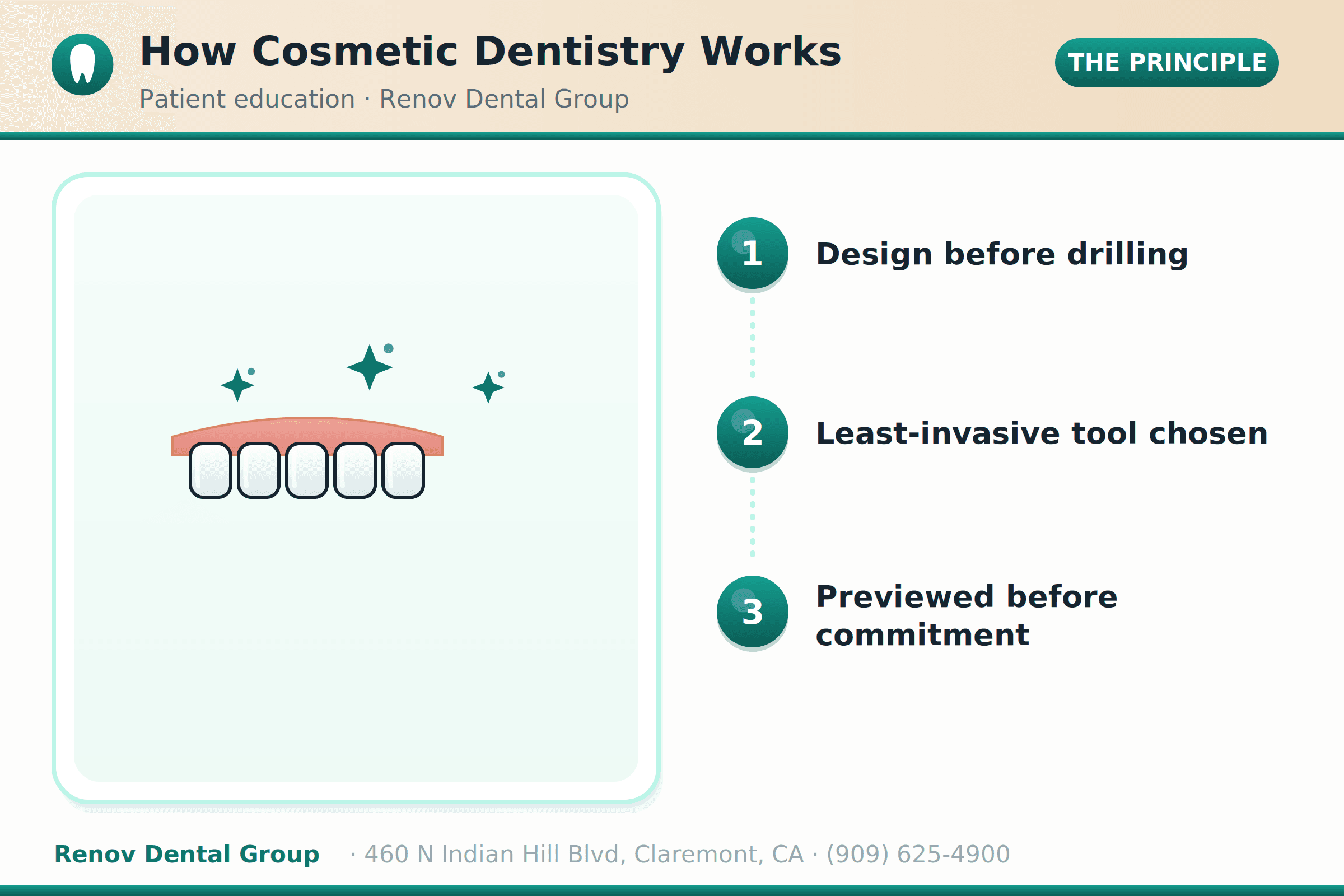
A dental filling repairs a tooth damaged by decay or minor fracture: the affected portion is removed and the space restored with durable, tooth-colored composite resin that bonds directly to the tooth and helps reinforce what remains. Bonding uses the same resin, sculpted rather than fitted into a cavity, to repair chips, cracks or uneven edges on visible teeth.
The American Dental Association considers both composite and traditional silver (amalgam) fillings safe and effective; amalgam has historically shown somewhat longer survival in high-force back teeth, but composite is generally preferred today for its natural appearance.
What Dental Fillings & Bonding Can Help With
- Small-to-moderate cavities and minor fractures
- Chipped edges, small gaps and worn spots on visible teeth
- Failing or visibly dark older fillings
- Sensitivity from exposed or decayed spots
Filling & Bonding Options at Our Office
- Tooth-Colored Composite Fillings — our standard: shade-matched resin bonded for a seamless look on any tooth.
- Dental Bonding — the same composite sculpted to repair chips, small gaps and worn edges on front teeth.
- Filling Replacement — removing an old or leaking restoration and rebuilding with fresh, well-sealed composite.
Am I a Candidate for Dental Fillings or Bonding?
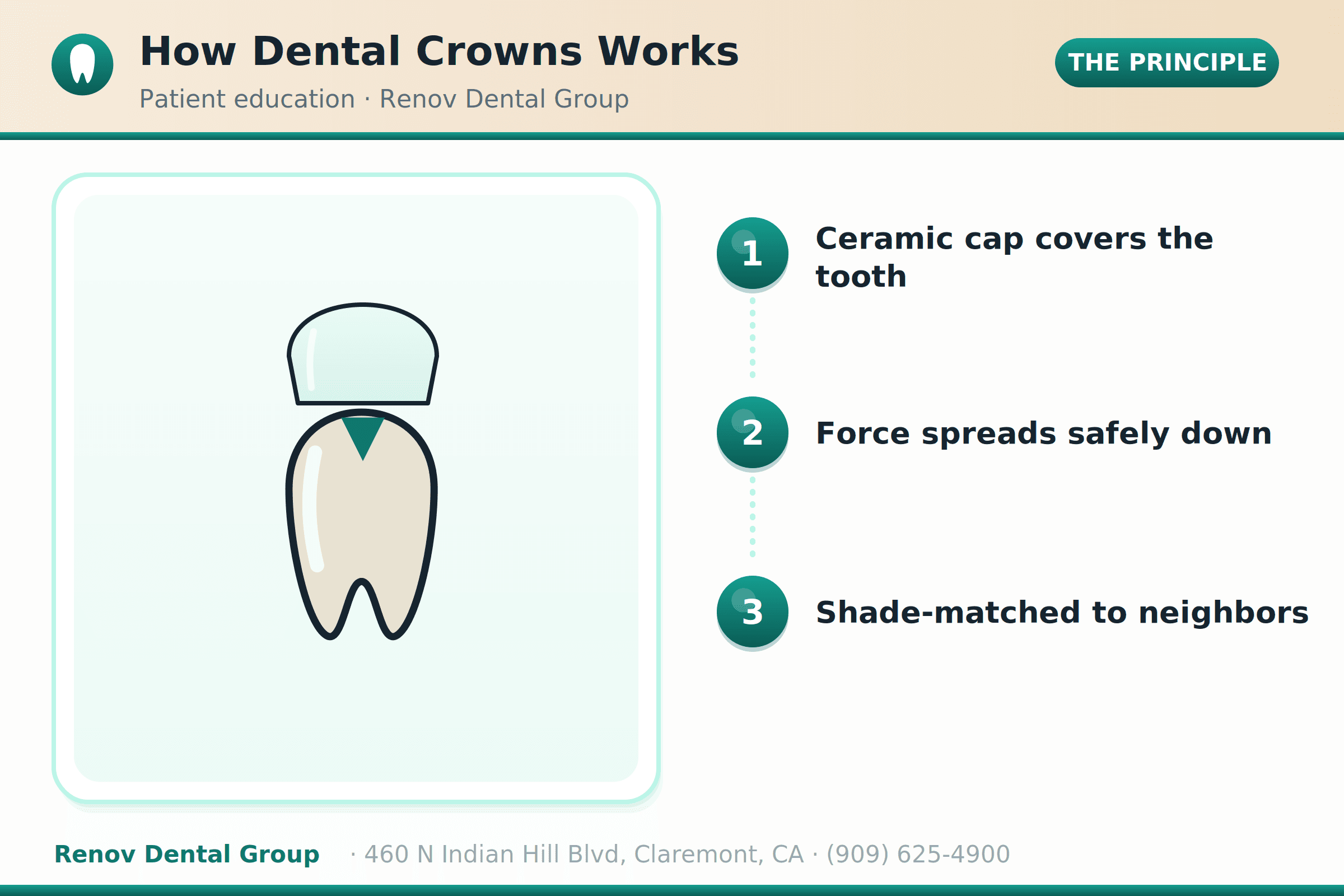
Good candidates have decay caught while it is still small-to-moderate and mostly within enamel and outer dentin, or minor chips and gaps suited to bonding. A filling alone may not be enough if decay has spread close to the nerve — root canal treatment is typically needed first, sometimes with a crown afterward. If too much tooth structure has broken down to support a filling, a dental crown or bridge is usually sturdier. In the earliest, pre-cavity stage, fluoride and better home care can sometimes remineralize the area without drilling — something we evaluate at an exam, not in advance.
What to Expect, Step by Step
- 1.
The area is gently numbed
for your comfort.
- 2.
Decay or damage is conservatively removed.
- 3.
The tooth is conditioned
and composite is placed in layers.
- 4.
Each layer is light-cured
then shaped to your bite.
- 5.
Final polish and bite check
so the tooth feels natural.
Recovery and Downtime
Numbness wears off within a few hours — avoid chewing on that side until it does. Mild temperature sensitivity for a few days is common and settles on its own. If your bite feels high once numbness fades, call us for a quick adjustment.
Risks & Limitations
Fillings and bonding are common, low-complication procedures, but a few things are worth knowing:
- Mild hot/cold or pressure sensitivity for a few days to a couple of weeks is common and usually resolves on its own.
- Composite shrinks very slightly as it cures, so it's placed in layers and we check margins at each checkup — over years, wear or a small edge gap can let new decay start.
- If decay turns out deeper than expected and reaches the nerve, a root canal may be needed instead of, or after, the filling.
- Fillings don't last indefinitely — they can wear, chip or need replacement, and results vary with size, location, hygiene and grinding habits.
- Persistent throbbing pain, a bite that stays high after numbness fades, or lingering heat/cold sensitivity should be evaluated promptly.
Making Your Fillings Last
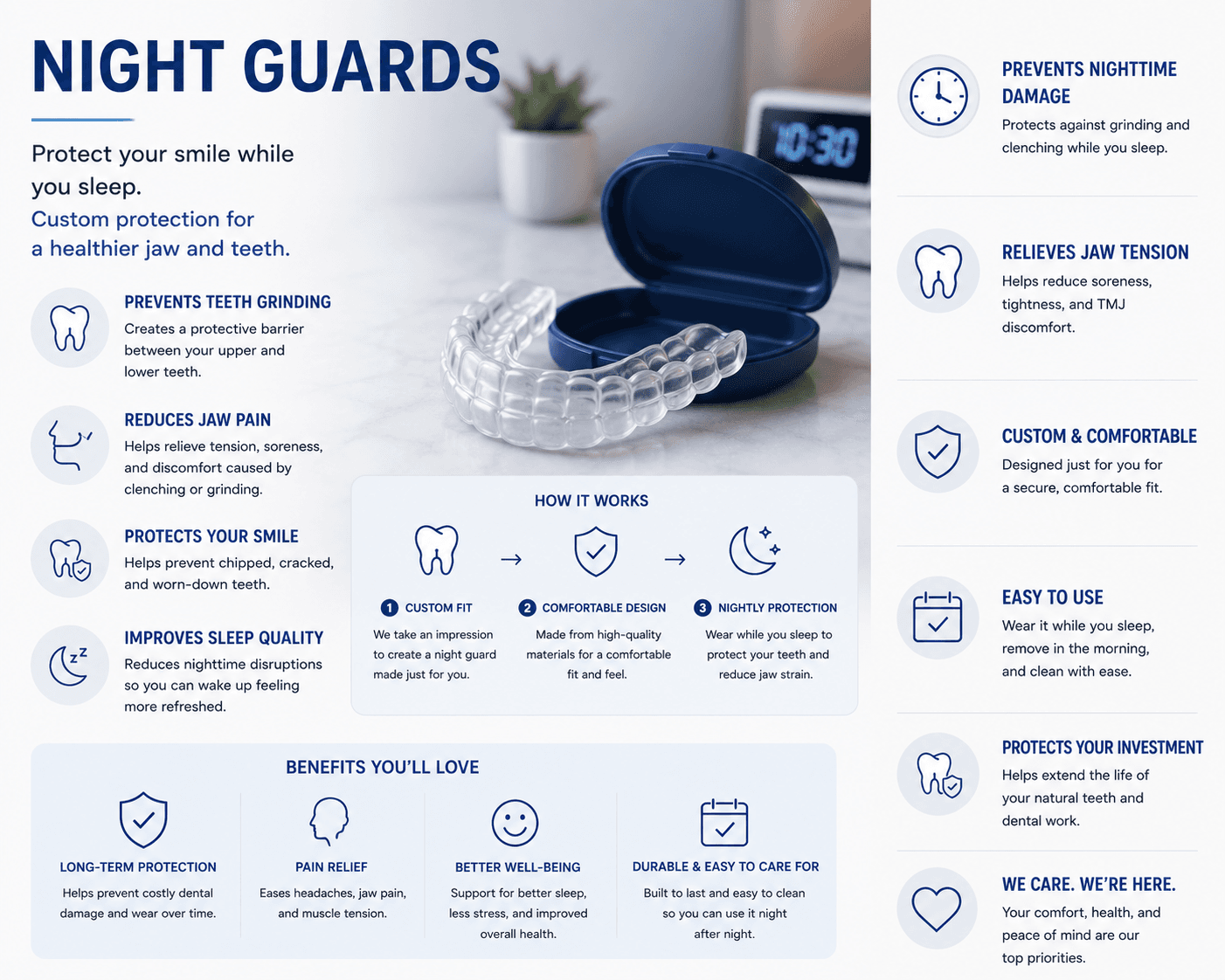
Brush and floss normally — composite cares for itself with good hygiene. Avoid chewing ice or hard candies that can chip a restoration, keep regular checkups, and wear a nightguard if you grind.
Timeline & Cost Factors
A straightforward filling is usually completed in one visit. Cost and time depend on the size and number of surfaces, the tooth's location, whether an old filling must be removed first, and whether a crown or root canal turns out to be needed. Fillings are a commonly covered PPO benefit, though the exact amount depends on your plan and deductible; Cherry financing can spread out the cost.
Treatments That Pair Well With Dental Fillings
- Dental Crowns & Bridges — for damage too extensive for a filling.
- Root Canal Treatment — when decay has reached the nerve.
- Teeth Cleaning — routine hygiene visits that catch cavities early.
Why Claremont-Area Patients Choose Renov Dental Group
- A gentle, patient-first approach for people nervous about dental visits
- Care led by Dr. Sally Yi, DDS — a UCLA-trained dentist who received the Dean's Scholarship and was named Resident of the Year during her residency
- A conservative philosophy: preserving natural teeth and recommending only what is needed
- Most major PPO plans accepted, with flexible monthly financing through Cherry
- A convenient office on N Indian Hill Blvd, close to the I-10 and 210 freeways
FAQ
What do dental fillings actually do for you?+
A filling stops decay from spreading toward the nerve, restores comfortable chewing, and — done early — helps you avoid larger treatment like crowns or root canals later.
Is a filling painful?+
The tooth is fully numbed before any work begins, so you should feel pressure at most. If injections worry you, let us know — Dr. Yi is known for a slow, gentle technique.
How long does a filling take?+
A single filling typically takes about 30–45 minutes; several in the same area can often be done in one slightly longer visit.
Can old metal fillings be replaced?+
Depending on the tooth and the old filling's condition, replacement with tooth-colored composite may be an option — best discussed at a consultation.
Does my dental insurance cover dental fillings?+
Fillings are a core restorative benefit on most PPO plans, which commonly cover a meaningful portion after any deductible. We accept most major PPO plans, including Aetna, Cigna and MetLife, and verify your benefits first. Cherry financing is available for patients without coverage.
How long do composite fillings last?+
Composite fillings are often cited as lasting roughly 5 to 10 years or longer, depending on size, location and care — back-tooth fillings tend to wear faster than front ones. Regular checkups help us catch edge wear early.
What happens if a filling isn't enough to fix the tooth?+
If decay reaches the nerve, a root canal may be needed; if too much structure is compromised, a crown is usually sturdier. We'll explain the reasoning before recommending anything beyond a standard filling.
Schedule a Consultation
Call (909) 625-4900 or book an appointment online to have a cavity or chip evaluated.