Last updated:
Looking for teeth cleaning near Claremont? Renov Dental Group, on N Indian Hill Blvd just north of the Claremont Village, offers a thorough, comfortable hygiene visit that protects your teeth and gums between checkups. Care is led by UCLA-trained Dr. Sally Yi, DDS, we accept most major PPO plans, and we're known for genuinely gentle care for anxious patients — cleanings are never rushed, and we focus on prevention so small issues never become major treatment.
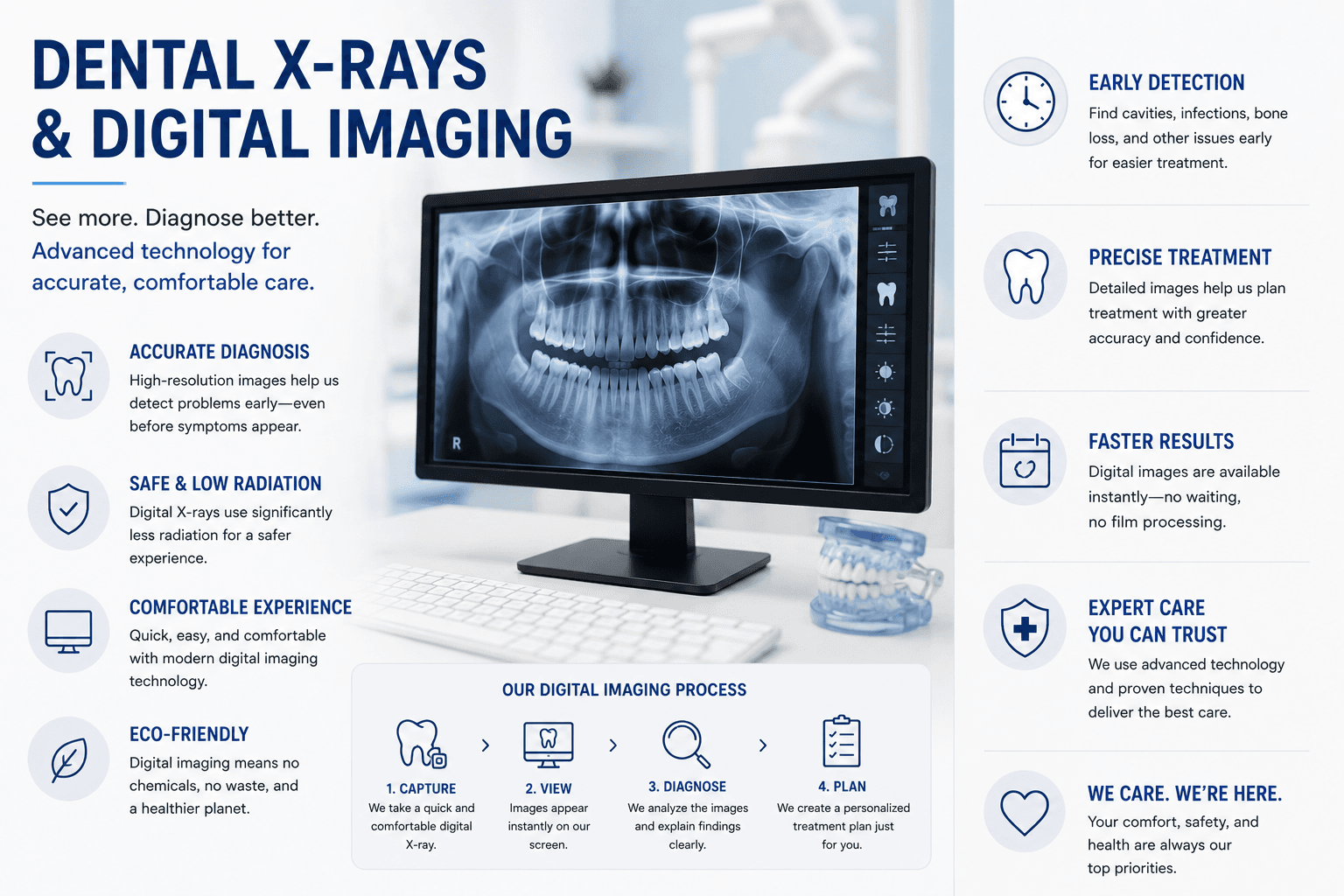
During a cleaning, a hygienist uses hand instruments and an ultrasonic scaler to lift plaque and calculus off the enamel and from just beneath the gumline, then polishes so new buildup has a harder time attaching. The visit usually pairs with an exam and, when due, digital X-rays. How often you need one is individualized rather than a fixed rule (see Timeline & Cost Factors below).
Most patients with healthy or mildly inflamed gums are candidates for a routine cleaning. If X-rays and a periodontal exam show established periodontitis — deeper pockets or bone loss — scaling and root planing is typically recommended first, since a standard cleaning alone will not address infection below the gumline.
A few patients need extra planning. If you take blood thinners, you generally do not need to stop them for a cleaning — just tell us so we can coordinate care. With certain heart conditions, such as an artificial heart valve or a history of infective endocarditis, antibiotics may be advised beforehand; this is decided with your physician, not by our office alone. Please share your medical history and medications, and check with your physician if you're unsure whether premedication applies.
A brief health review
and a look at how your gums have changed since your last visit.
Digital X-rays
when due, so nothing hidden between teeth is missed.
Ultrasonic and hand scaling
to remove plaque and tartar; for scaling and root planing, local anesthesia numbs the area first.
Polishing, flossing and fluoride
when appropriate.
A clear summary
of findings and a personalized home-care plan.
Mild gum tenderness for a day is normal, especially after a long gap between visits. You can eat and drink normally right away (wait briefly after fluoride), and slight cold sensitivity usually settles within a few days to a couple of weeks. After scaling and root planing, gums can look different as swelling goes down — inflamed tissue shrinks to a healthy size, so a bit more of the tooth root may show. This is healing, not new damage; tell us if tenderness doesn't improve as expected.
Teeth cleaning is preventive and maintenance care, not a cure-all — results depend partly on your home care between visits. Temporary effects can include gum tenderness, minor bleeding, and short-term sensitivity to cold or sweet foods; with scaling and root planing, sensitivity can be more noticeable afterward, and outcomes vary with how advanced the disease was and how well a patient keeps up with maintenance. Scaling and root planing manages periodontitis and helps stop it progressing, but it does not reverse bone loss already present, and disease can recur without sustained maintenance and daily hygiene.
Professional cleaning works with daily home care, not in place of it. Brush twice daily with fluoride toothpaste angled toward the gumline, clean between teeth once a day, and limit frequent sugary snacks and acidic drinks. Since some tartar cannot be removed by brushing and flossing, higher-risk patients usually benefit more from frequent professional maintenance than from home care alone. If your gums show signs of active periodontal disease, see Gum Disease Treatment for how scaling and root planing fits into a broader plan.
How often you need a cleaning, and what it costs, depends on your individual risk profile and insurance coverage rather than one fixed answer. Healthy-gum patients with no history of frequent cavities are typically seen twice a year; patients managing gum disease are seen more often for periodontal maintenance. We verify your benefits before treatment and can walk you through options, including Cherry monthly financing.
A. It helps stop cavities and gum disease before they start, keeps breath fresh, and lets your dentist spot small problems while they are still easy to fix.
A. For most patients a cleaning is comfortable. If your gums are inflamed or you tend to be sensitive, tell us — we can slow the pace and numb specific areas.
A. A regular cleaning (prophylaxis) removes plaque and tartar at and just below the gumline for healthy gums. A deep cleaning (scaling and root planing) treats periodontitis — cleaning root surfaces further below the gumline, usually with local anesthesia by quadrant, followed by periodontal maintenance rather than a return to standard cleanings.
A. A routine cleaning and exam usually takes about 45–60 minutes. Deep cleanings are often split across visits, roughly 45–60 minutes per quadrant.
Call (909) 625-4900 or book an appointment online to schedule your next cleaning.