Last updated:
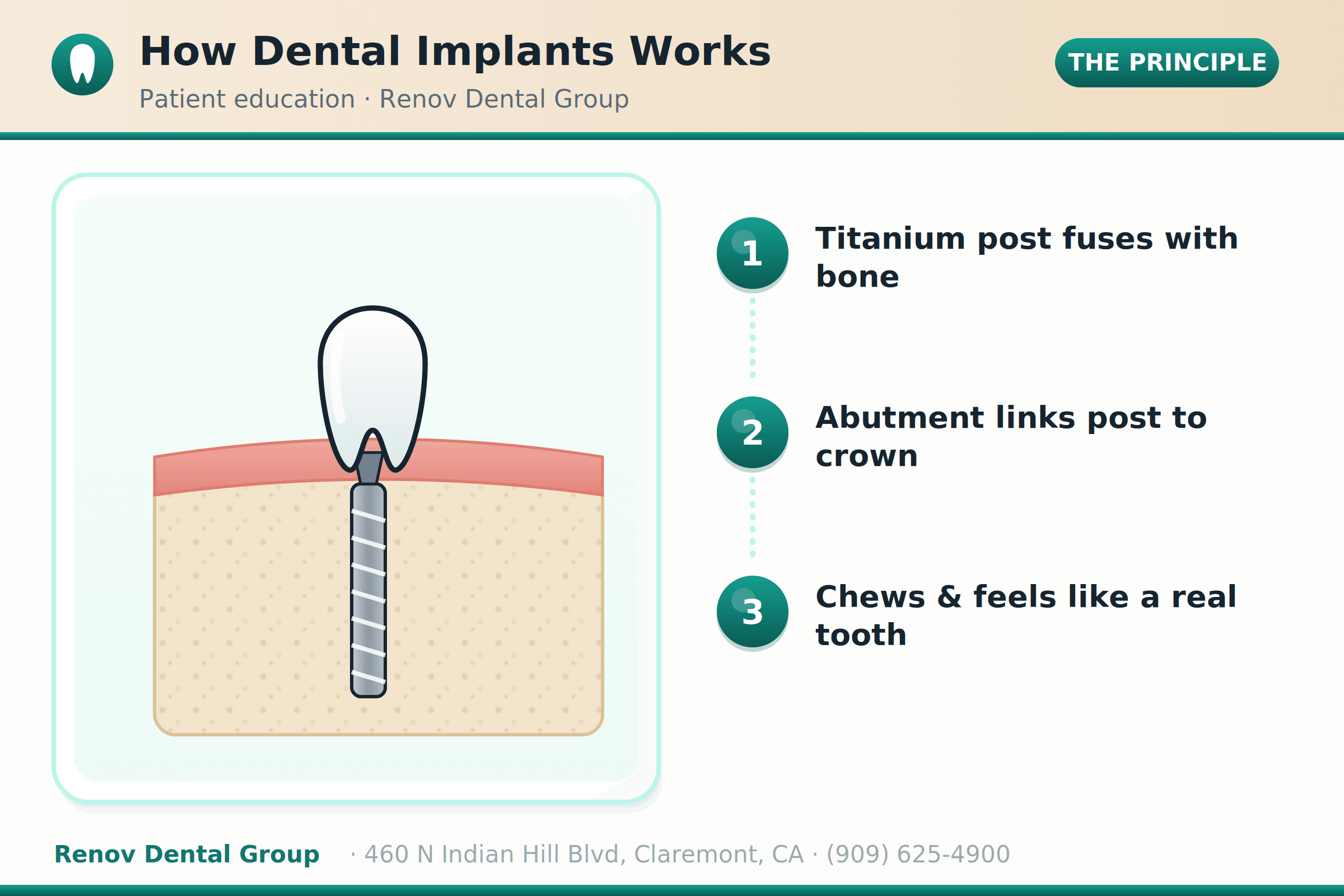
Guided implant surgery uses 3D imaging and computer-assisted planning to map bone, nerves, and sinus anatomy, then follows that plan — often with a custom surgical guide — to direct implant position, angle, and depth with more precision than freehand placement alone. Care at Renov Dental Group, on N Indian Hill Blvd in Claremont, is led by UCLA-trained Dr. Sally Yi, DDS, and the office accepts most major PPO insurance plans.
This approach reflects our conservative philosophy of planning thoroughly before we ever pick up a handpiece.
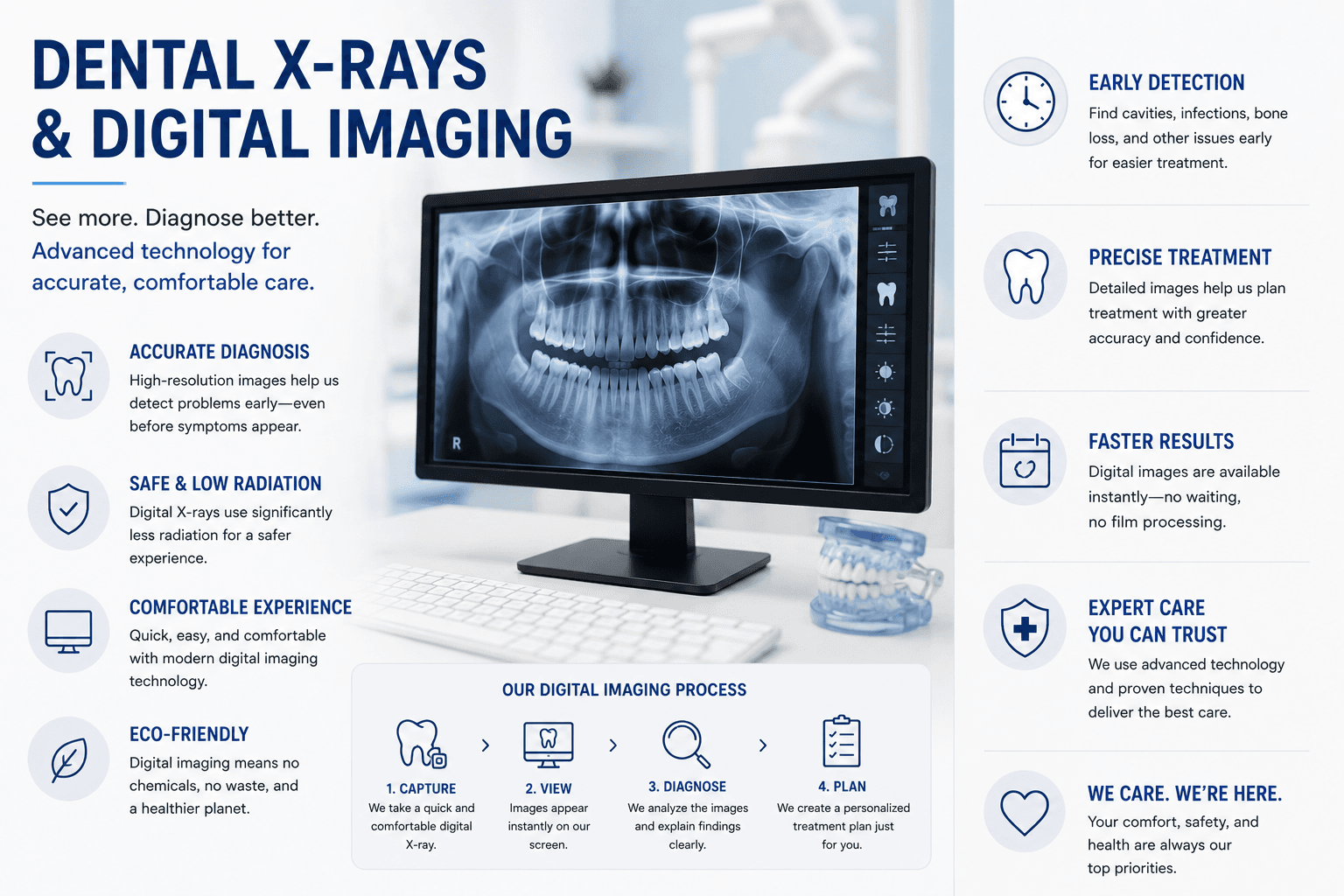
Guided implant surgery combines 3D imaging (typically a cone-beam CT scan), planning software, and a surgical guide or navigation system to assist during placement. A digital plan is built from your own bone volume, nerve pathways, and sinus position, and a custom guide — a template fitting over the teeth or gums — keeps the implant on that path. Studies comparing guided and freehand placement generally find guided techniques produce more accurate, consistent positioning, with better visualization of anatomy before any incision.
Consultation
a detailed exam evaluates oral health, missing teeth, bone structure, and goals.
Digital imaging
a 3D (cone-beam CT) scan evaluates bone, nerves, and sinus anatomy.
Virtual planning
software builds a plan for ideal implant position and restoration design.
Surgical guide creation
when appropriate, a custom guide is fabricated from the plan.
Implant placement
placed per the plan, typically under local anesthesia, using the guide.
Healing and restoration
after osseointegration, the final crown, bridge, or attachment is placed.
Most candidates for dental implants are also candidates for the guided approach, since 3D imaging is part of routine implant workup. It is especially useful where placement is delicate — near nerves, sinuses, or tight spaces — and when a less invasive, flapless approach is desirable.
It is not automatically right for everyone, though. A guide takes up space in the mouth, so very limited mouth opening may rule it out, and significant bone loss or anatomy needing simultaneous grafting is sometimes better served by a directly visualized approach or staged treatment that builds bone first.
Guided surgery is designed to improve precision, but it does not eliminate the standard risks of implant surgery, and results still vary by case:
We review these individually and recommend a conventional approach whenever it better fits your case.
Conventional "freehand" placement, relying on direct visualization rather than a guide, remains standard and appropriate for many patients — particularly straightforward single-tooth sites with generous bone. Anxious patients can add sedation and anxiety-friendly dentistry to either approach. Guided or freehand, the implant and its healing timeline are the same — see dental implants for candidacy, implant types, and aftercare.
Recovery mirrors any implant surgery: mild swelling or tenderness for a few days, soft foods early on, and a return to normal activities within a day or two. Surgery is often quicker with a guide, but healing is not — bone still needs time to fuse to the implant (osseointegration), typically around 3 to 6 months, before the final restoration is placed. Grafting extends the timeline. Cost is influenced by imaging, guide fabrication, implant count, and any grafting needed; we provide a written estimate after consultation.
Freehand placement relies on the surgeon's direct visualization and judgment. Guided surgery adds a 3D imaging-based plan, often with a custom guide, to help direct the implant's position, angle, and depth. Research generally shows guided techniques produce more consistent positioning, but it does not eliminate the normal risks of implant surgery.
Most implant candidates qualify, since 3D imaging is part of routine implant workup. Very limited mouth opening or complex bone loss may call for a conventional approach or preparatory treatment first.
As with any implant surgery: bleeding, swelling, infection, temporary bite changes, and possible nerve injury causing numbness — usually temporary, though rarely longer-lasting. Careful planning reduces these risks but cannot guarantee against them.
Some patients need bone grafting or other preparatory treatment first. Your 3D scan and consultation will show whether this applies to you.
The surgery itself is often efficient, but bone still needs time to fuse to the implant — typically 3 to 6 months — before your final restoration is placed.
Coverage varies by plan and generally mirrors implant coverage. Renov Dental Group accepts most major PPO plans and verifies your benefits before treatment. Patients without insurance are welcome, and Cherry monthly financing is available for qualified patients.
Call (909) 625-4900 or book an appointment online to learn whether guided implant surgery is right for you.