Last updated:
Looking for gum disease treatment near Claremont? Renov Dental Group, on N Indian Hill Blvd just north of the Claremont Village, provides early, root-cause treatment that calms bleeding gums and protects the bone that holds your teeth. Care is led by UCLA-trained Dr. Sally Yi, DDS, the office accepts most major PPO insurance plans, and it is known for genuinely gentle care for anxious patients.
Our philosophy is to treat gum disease at its root cause — bacterial buildup below the gumline — as early and as conservatively as possible, so your natural teeth stay supported for the long term.
Gum disease treatment covers the procedures used to stop periodontal infection, from professional deep cleaning for early gingivitis to ongoing periodontal maintenance for more advanced cases. Treatment works by physically removing the bacterial deposits that drive the infection: scaling clears plaque and tartar from below the gumline, root planing smooths the root surfaces so tissue can reattach, and a tailored maintenance schedule keeps bacteria from re-establishing in deep pockets.
It is most often recommended when gums bleed easily, pockets deepen beyond healthy limits, or X-rays show early bone changes.
Gum disease generally falls into two stages. Gingivitis is inflammation and bleeding with no bone loss on X-rays — typically reversible with a thorough cleaning and better home care. Periodontitis means bone or attachment loss has occurred; it's generally not reversible, but scaling and root planing is the standard first step to stop it from progressing.
Smokers and patients with poorly controlled diabetes often need closer monitoring. If you have certain heart conditions, take blood thinners, or other conditions affecting bleeding or infection risk, please share your full medical history at your visit.
Comprehensive gum measurement
we chart pocket depths and bleeding points.
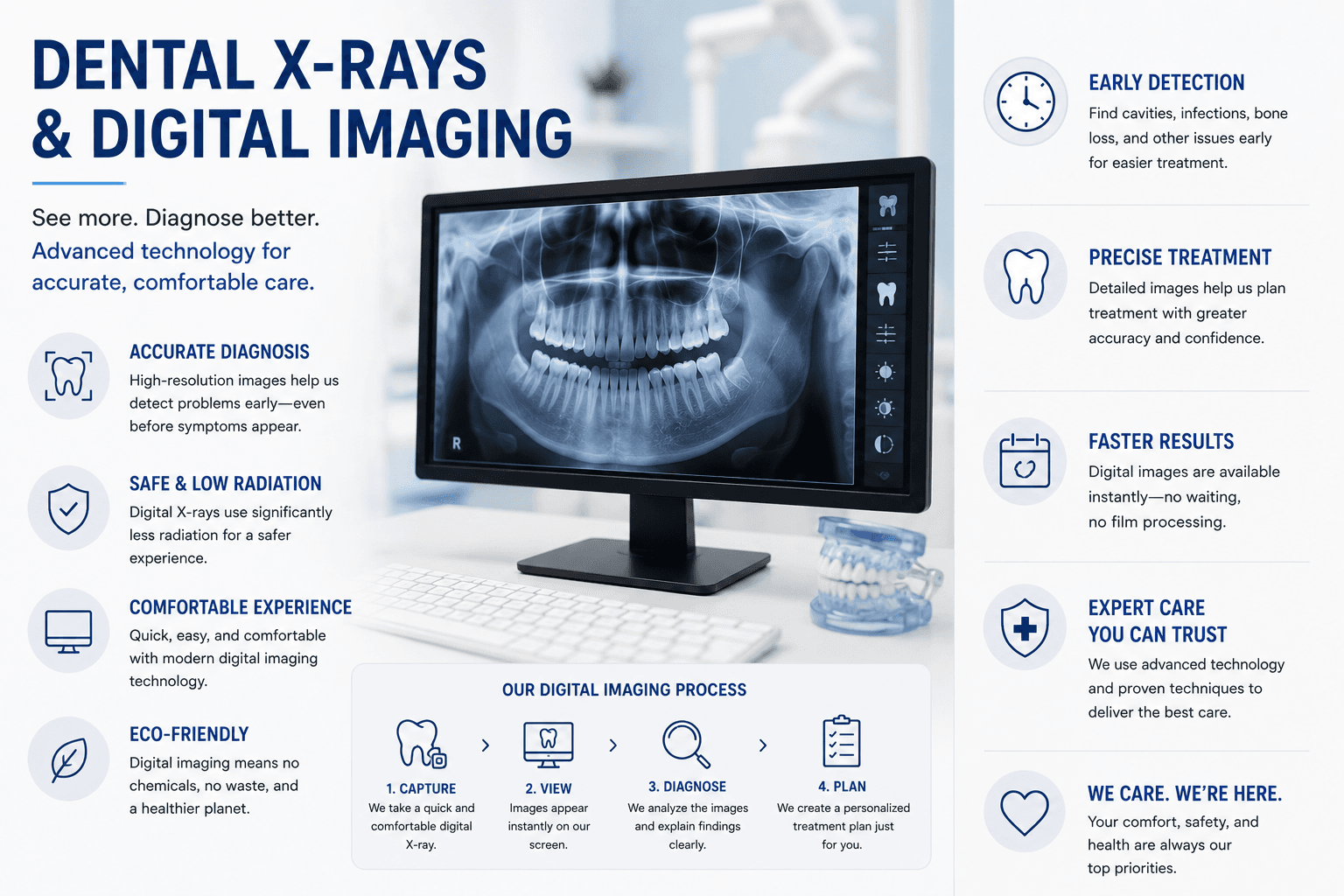
Digital X-rays
to assess the bone supporting each tooth.
Scaling and root planing
by area, with thorough numbing for comfort.
A re-evaluation visit
about 4–6 weeks later to measure healing.
A personalized maintenance interval
to keep results stable.
Gums may feel tender for a few days, and mild sensitivity to cold is common. Warm salt-water rinses help soothe the treated areas, and some gum tightening is a healthy sign — it means swelling is resolving.
Scaling and root planing halts further bone loss in most cases, but it does not rebuild bone already lost. Some patients notice more visible gum recession or root sensitivity as swelling resolves — a known, manageable effect, not a complication. Advanced or stubborn cases may be referred to a periodontal specialist. Results also depend on consistent home care and maintenance visits; without them, gum disease can return.
For gingivitis without bone loss, a standard cleaning plus better home care is usually enough. For patients already treated for periodontitis, non-surgical periodontal maintenance is the primary way to keep the disease stable. If pockets stay deep despite deep cleaning and maintenance, Dr. Yi may recommend referral to a periodontal specialist for further options.
Active treatment is often completed in one or two visits, with a re-evaluation about 4–6 weeks later before starting maintenance. Cost depends on how many areas need treatment, whether antibiotic support is used, and your insurance benefits, which we review with you beforehand.
Daily flossing or interdental brushes matter most, since gum disease starts between teeth. Do not skip maintenance visits — pockets can re-infect silently — and if you smoke, quitting is one of the most effective ways to protect your gums and support healing.
The aim of gum therapy is to stop the infection that quietly destroys bone and gum attachment — protecting you from loose teeth and tooth loss, reducing bleeding and bad breath, and supporting your overall health.
Gingivitis is inflammation without bone loss and is typically reversible with a good cleaning and consistent home care. Periodontitis involves bone or attachment loss; it's generally not reversible, but treatment and maintenance can usually stop it from progressing.
Deep cleaning is done with thorough local numbing, so the procedure itself is comfortable. Afterward, expect a few days of mild tenderness rather than real pain, and we tailor the pace for anxious patients.
Each deep-cleaning visit takes roughly 60–90 minutes depending on how many areas are treated; many patients complete active treatment in one or two visits.
Early gingivitis often improves after a single thorough cleaning plus better home care. More advanced periodontal disease is generally managed rather than reversed, with the goal of stopping further bone and tissue loss.
Untreated infection tends to progress silently, deepening pockets and eroding the bone that supports your teeth, which can eventually lead to loose teeth and tooth loss. Early treat
Call (909) 625-4900 or book an appointment online to have your gum health evaluated.